Pattern No: 7996
| Pattern Name | Design Type | Designer | Likely Design Date |
|---|---|---|---|
| Not known | Floral | Susie Cooper | 1928 |
Notes
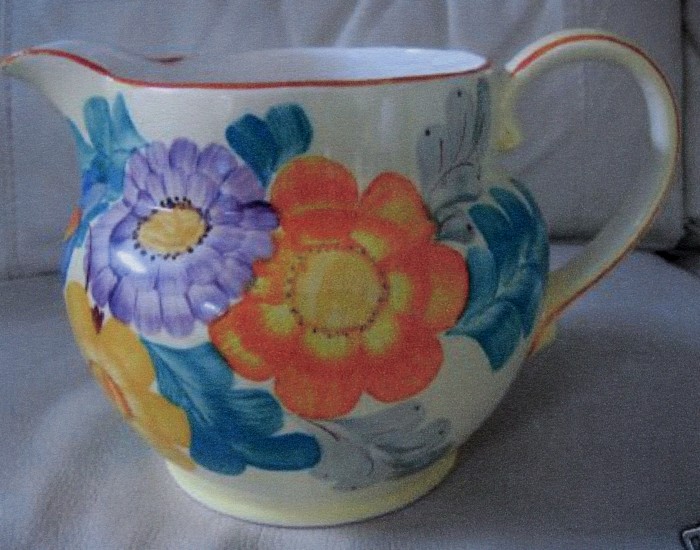
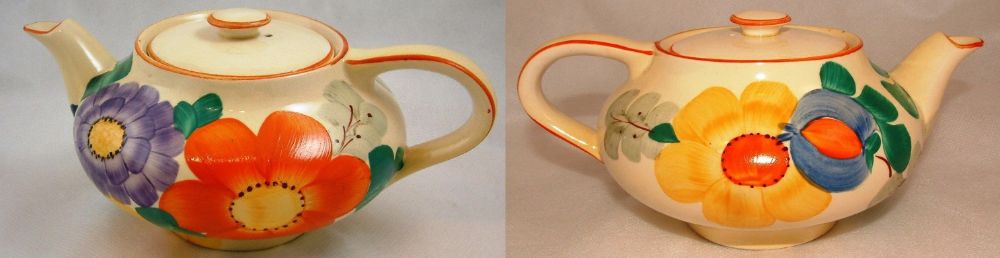
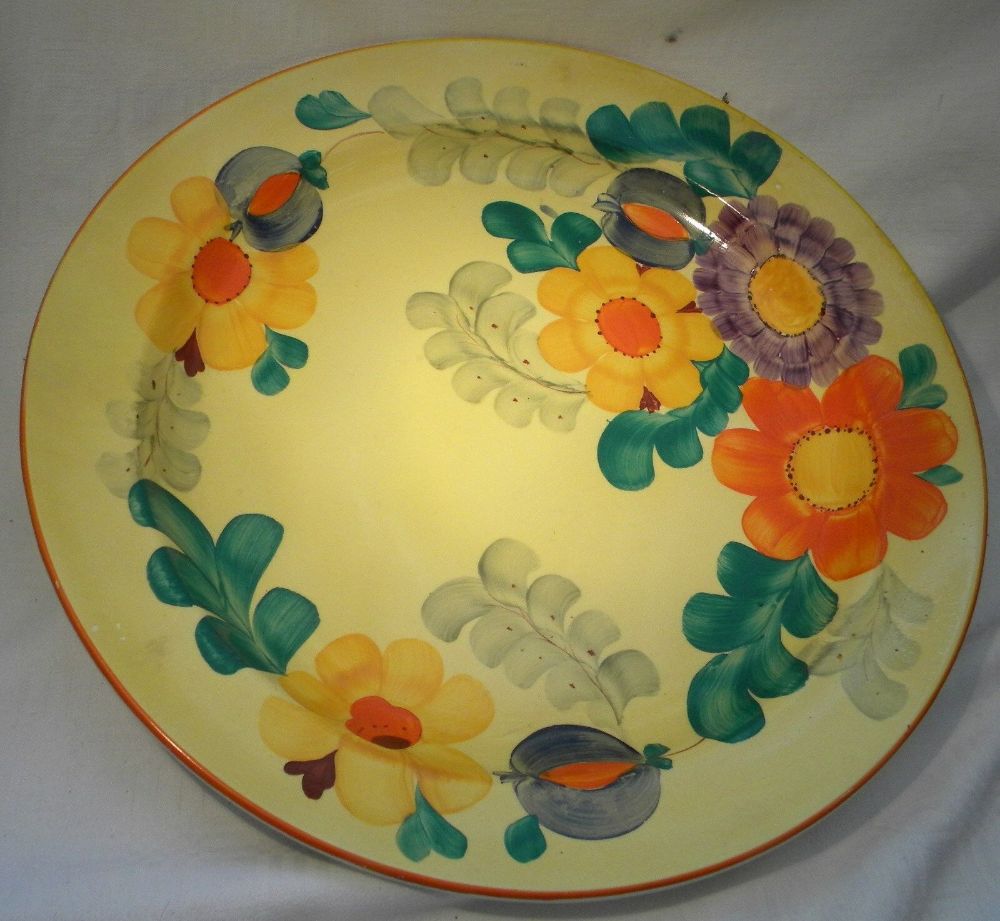
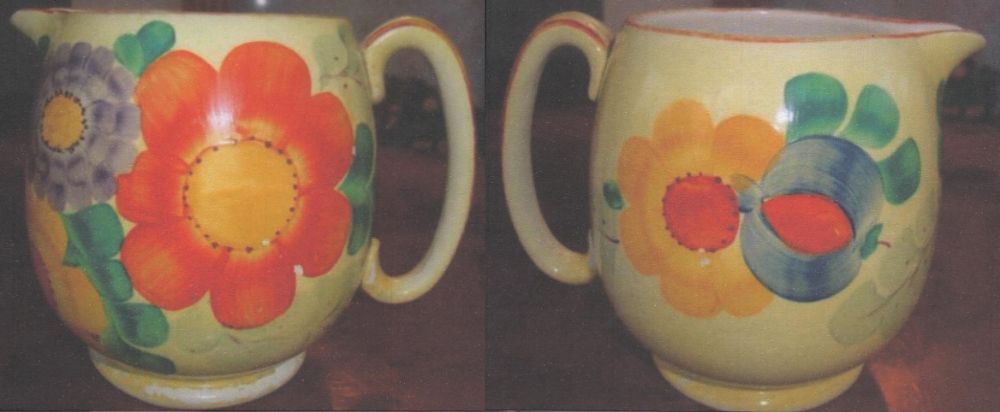
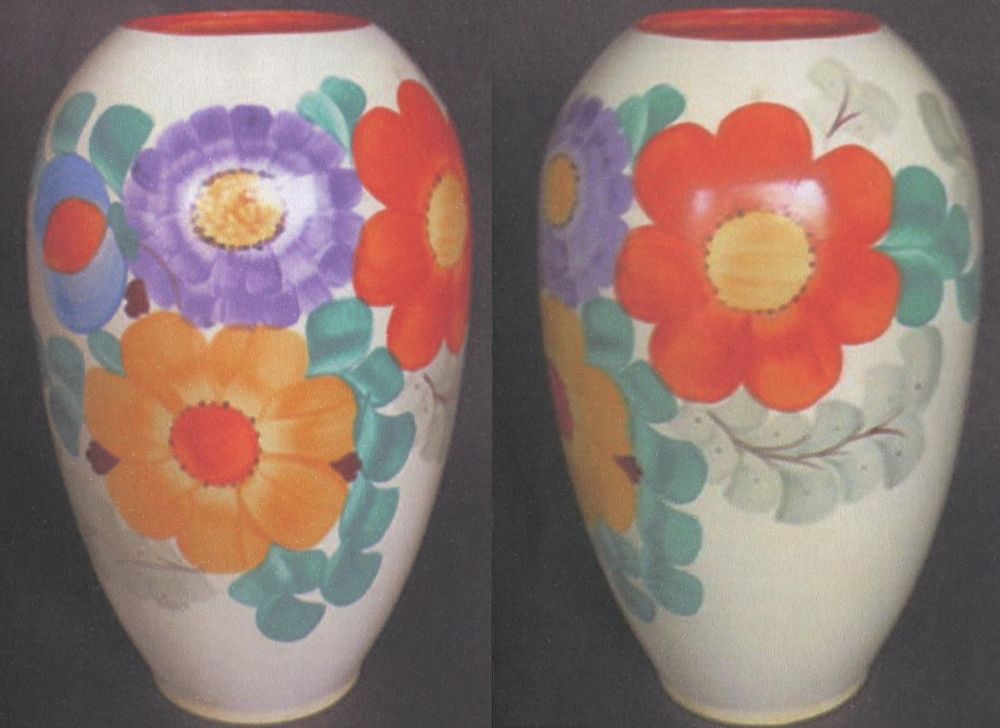
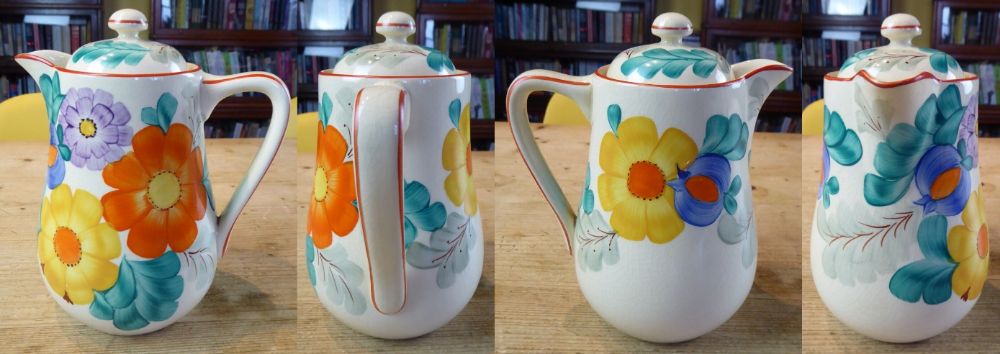
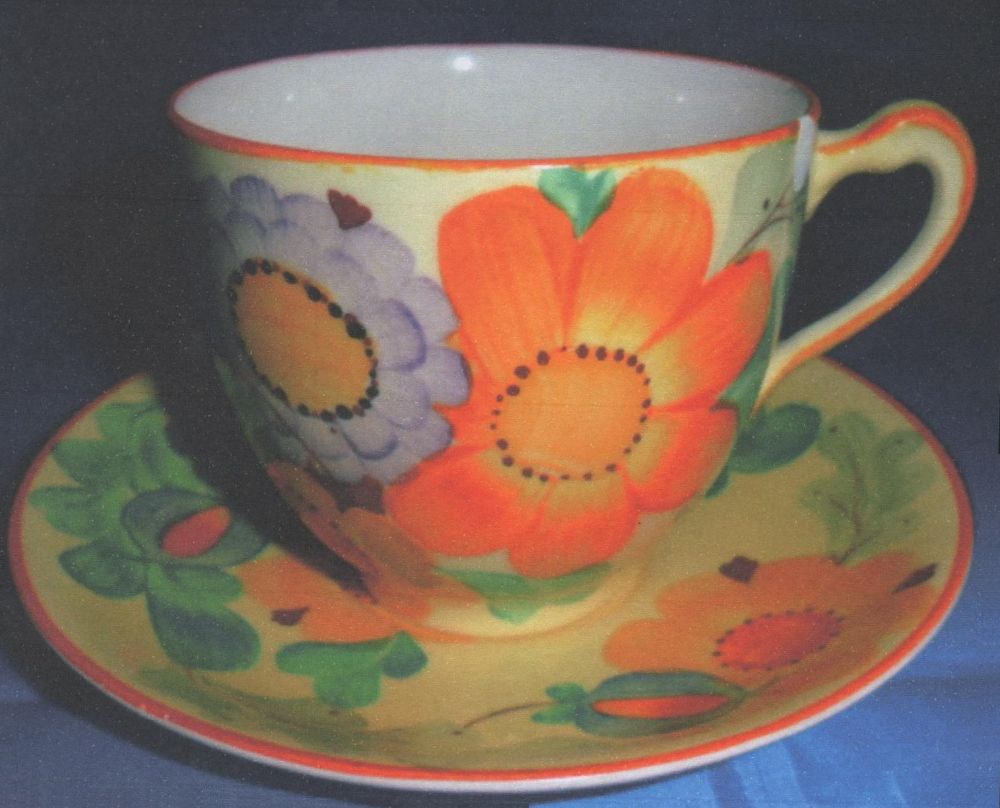
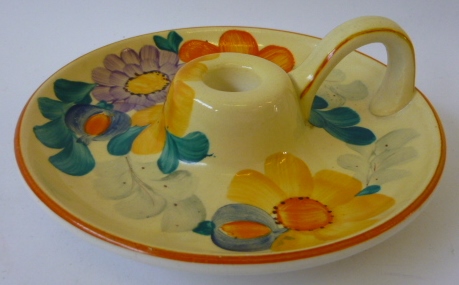
If the amount of 7996 pots seen at auction and on auction sites is anything to go by, this pattern probably vies with 7913 to be Gray’s most popular floral pattern. It has been recorded on a wide range of tea and coffee ware, on jugs of various shapes and sizes, plates (round, square and octagonal), beakers, bowls, trays, preserve pots and egg-cups as well as on decorative ware such as vases and candlesticks.
The coffee pot (or hot-water jug) in the sixth image has an R2 (Pharaoh’s boat) backstamp, which was in use from 1935-45. This suggests that the pattern was in production for many years. However, despite the pattern’s apparent popularity, it is unlikely that it was a design in the current catalogue for such a long time. It is more likely that the pot was made as a replacement for a broken piece under the company’s ‘matchings service’ (see the information under the Patterns section introduction).
Susie Cooper was always conscious of the need to design patterns whose execution in volume production would fit well within the capabilities of the factory and its decorators. This is an example of that policy in practice because, even though 7996 could be described as ‘busy’ and ‘bold’, it actually uses Gray’s traditional floral and leaf shapes, elements typical of the freehand motifs for which the employees were trained.
The coffee pot (or hot-water jug) in the sixth image has an R2 (Pharaoh’s boat) backstamp, which was in use from 1935-45. This suggests that the pattern was in production for many years. However, despite the pattern’s apparent popularity, it is unlikely that it was a design in the current catalogue for such a long time. It is more likely that the pot was made as a replacement for a broken piece under the company’s ‘matchings service’ (see the information under the Patterns section introduction).
Susie Cooper was always conscious of the need to design patterns whose execution in volume production would fit well within the capabilities of the factory and its decorators. This is an example of that policy in practice because, even though 7996 could be described as ‘busy’ and ‘bold’, it actually uses Gray’s traditional floral and leaf shapes, elements typical of the freehand motifs for which the employees were trained.
Similar Patterns
Images